
For decades corporate hospitality at a football match has followed a familiar script.
A private box. Decent wine. Pre-match analysis from a former player whose stories improve every season. Ninety minutes of tribal loyalty, punctuated by polite networking and the occasional VAR complaint.
And to be fair, football hospitality still works.
It creates theatre. It creates shared emotion. And for many brands, particularly those with strong regional roots, it remains a powerful way to build relationships.
But increasingly, I wonder whether the most valuable conversations in business are no longer happening under floodlights or in the stands.
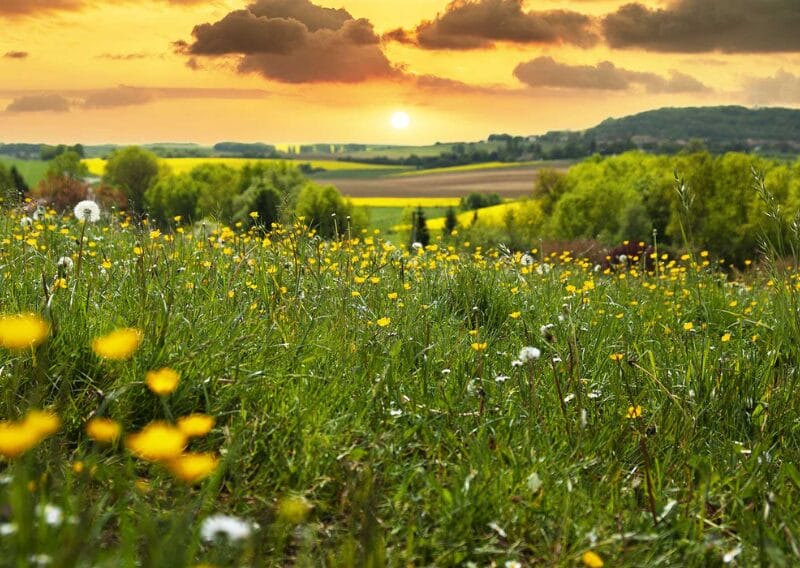
They are happening in wetlands.
Or woodlands.
Or beside a river that, five years ago, was biologically dead.
Or through watching dedicated, hardworking pollinators going about their business.
Because nature restoration projects are beginning to offer something football clubs — for all their strengths — simply cannot: perspective.
The Difference Between Entertainment and Meaning
Corporate hospitality in football is built around spectacle and dramatic theatre.
Nature restoration hospitality is built around participation.
That distinction matters.
At a football ground, guests consume an experience. At a restoration project, they become part of one.
You are not merely watching something explode for a short burst of time, you are contributing to something tangible and long-term.
A woodland expands. Pollinators return. Flood resilience improves. Soil recovers. Carbon is stored. Communities reconnect with landscapes they had forgotten.
It doesn’t happen over 90 minutes of course, so a regular return is important if you want to see progress but the conversation changes accordingly.
People speak less about quarterly targets and more about legacy.
Less about transactions and more about responsibility.
And perhaps most importantly, the setting itself changes the pace of interaction.
Stadium hospitality often encourages short bursts of conversation interrupted by goals, noise and scheduling. Nature creates room for longer thinking.
You walk together.
You observe together.
You stop performing.
That is surprisingly valuable in business.
Clients Increasingly Want Alignment, Not Just Access
Traditional corporate hospitality is largely about access (and often excess!). Access to tickets. Access to exclusivity. Access to decision-makers. About “getting in the room” with the right people.
Today, clients increasingly look for alignment.
They want to understand what a company stands for if they are considering doing business with them.
Inviting someone to a nature restoration project says something very different from inviting them to a derby match.
It says:
“We are thinking long-term.”
“We understand environmental responsibility.”
“We are prepared to invest in things that may not deliver immediate gratification.”
That matters, particularly to younger leadership teams and sustainability-conscious sectors where environmental credibility now influences procurement decisions nearly as much as pricing.
In some industries, hosting clients at a restoration project may soon feel less like a niche alternative and more like a strategic necessity.
Nature Creates Better Conversations
There is also a practical reality few people mention.
People are more open outdoors.
Not because trees possess magical consulting powers, but because natural environments reduce formality.
Hierarchies soften. Phones disappear into pockets. The conversation becomes less performative and more honest. People engage!
A boardroom discussion transplanted to a rewilding site somehow becomes more constructive.
Perhaps because nature reminds us that most business problems are not actually life-or-death emergencies.
A delayed contract can suddenly feel less catastrophic beside a recovering wetland.
Most reasonable people find that the strongest commercial relationships are built when nobody is aggressively trying to sell anything.
Football Still Has One Huge Advantage
To be clear this blog is not an attack on the relevance of sport sponsorship (I love it!).
Far from it.
Football, like most sports, still delivers something nature cannot replicate: emotional intensity.
A last-minute winner creates instant camaraderie in a way tree planting probably never will.
Sport also remains culturally universal. It cuts across industries, age groups and backgrounds with remarkable efficiency. A shared allegiance — or rivalry — accelerates familiarity.
And importantly, football offers certainty. Fixtures are scheduled. Outcomes are immediate. Hospitality infrastructure is run with military precision.
Nature restoration is slower, less polished and occasionally muddy.
Whist there are huge, hidden, life or death battles taking place in nature they are less visible than the gladiatorial contest unfolding on a football pitch.
Which may, in fact, be part of its appeal.
The Smart Businesses Will Probably Do Both
The future is unlikely to be either/or.
The smartest organisations will use each environment differently. Football for celebration, visibility and energy.
Nature restoration for strategy, trust-building and values.
One creates excitement.
The other creates depth.
And in a business world increasingly focused on authenticity, depth is becoming commercially valuable.
There was a time when corporate hospitality was essentially about impressing people.
Now it is increasingly about revealing who you are.
That shift may explain why a growing number of meaningful business conversations are taking place not in executive boxes, but alongside landscapes that are being quietly brought back to life.
The elephant in the room in this case is cost.
Taking clients and prospects to a meaningful football match and plying them with fine wine, great food and quite often a car to take them home, is never cheap!
To do it properly, the host must invest a lot of money.
Not so in nature restoration.
We can find projects right across the UK that have a very welcoming entry cost and will ensure your guests don’t have to hide when their own compliance people come calling on them after the weekend!
To find out how Nature Sponsorship can have a dramatic impact on your business contact me on roger@theebn.co.uk